Wednesday, April 15, 2026

Tuesday, February 24, 2026
BROOKLYN MASALA: Hilarious New Cozy Mystery Now Available for Preorder!
I'm so thrilled to announce that my new amateur sleuth/cozy mystery "Brooklyn Masala" is now available for preorder at Amazon for only $2.99.
Who knew fixing your karma could be so dangerous?

She buys an Indian cookbook and starts experimenting with different recipes until she becomes a top-notch Indian chef, even coming out with her own line of spices under the brand name, “Brooklyn Masala.” The Guru instructs her to distribute her spices through a network of shady Indian groceries and the “payment” is suspicious-looking chocolate bars. But when her spices are linked to an international gang of diamond smugglers and one of them ends up dead in the East River, Bella is in a race to save her name, her reputation, and her life.
With the help of an attractive FBI agent named Mike and her new partner, ex-Bollywood star Dolly Parton Patel, Bella realizes that garam masala is the cure she needed all along.
Filled with wit, humor, and unshakable determination, BROOKLYN MASALA is an offbeat love story about finding romance later in life, taking chances, and learning to leave one’s comfort zone for love and happiness. The first in a new amateur sleuth mystery series!
For fans of Janet Evanovich’s Stephanie Plum series, Elle Cosimano's Finlay Donovan series, Jennifer Crusie, Gemma Halliday, and Jana DeLeon.

Monday, June 30, 2025
New Short Story: The Firebird
So happy to announce I have a new short story, 𝙏𝙝𝙚 𝙁𝙞𝙧𝙚𝙗𝙞𝙧𝙙, that is now available for pre-order:

𝐖𝐡𝐞𝐧 𝐚𝐧 𝐮𝐧𝐞𝐱𝐩𝐞𝐜𝐭𝐞𝐝 𝐥𝐞𝐭𝐭𝐞𝐫 𝐚𝐫𝐫𝐢𝐯𝐞𝐬, 𝐊𝐚𝐫𝐚 𝐄𝐫𝐢𝐤𝐬𝐞𝐧 𝐥𝐞𝐚𝐫𝐧𝐬 𝐚 𝐬𝐡𝐨𝐜𝐤𝐢𝐧𝐠 𝐭𝐫𝐮𝐭𝐡 𝐚𝐧𝐝 𝐠𝐨𝐞𝐬 𝐨𝐧 𝐚 𝐣𝐨𝐮𝐫𝐧𝐞𝐲 𝐨𝐟 𝐝𝐢𝐬𝐜𝐨𝐯𝐞𝐫𝐲 𝐭𝐨 𝐫𝐞𝐜𝐨𝐯𝐞𝐫 𝐡𝐞𝐫 𝐥𝐨𝐬𝐭 𝐍𝐚𝐭𝐢𝐯𝐞 𝐀𝐦𝐞𝐫𝐢𝐜𝐚𝐧 𝐡𝐞𝐫𝐢𝐭𝐚𝐠𝐞 𝐚𝐧𝐝 𝐟𝐢𝐧𝐝 𝐡𝐞𝐫 𝐦𝐢𝐬𝐬𝐢𝐧𝐠 𝐟𝐚𝐭𝐡𝐞𝐫.
Boston, 1992. Kara Eriksen, a recent college graduate, is set to start her new job as an investigative reporter at Newsday. But when an unexpected letter arrives from an aunt she never knew, mysteries about her past surface, upending her world and everything she has ever believed about herself.
Faced with a mountain of questions and no clear answers, Kara embarks on a journey of discovery to meet her long-lost aunt on the Yakima Reservation in Washington and find her missing father, Joe Wheeler, a man she never knew, but desperately needs to feel whole, safe, and secure. But more than anything, Kara’s journey is about finding her place in the world.
𝐂𝐚𝐧 𝐊𝐚𝐫𝐚 𝐟𝐢𝐧𝐝 𝐡𝐞𝐫 𝐟𝐚𝐭𝐡𝐞𝐫 𝐛𝐞𝐟𝐨𝐫𝐞 𝐢𝐭’𝐬 𝐭𝐨𝐨 𝐥𝐚𝐭𝐞?
Click here: https://www.amazon.com/dp/B0FG1ZVVH8/
Tuesday, May 27, 2025
An Alternative to THAT Fake A.I.-Generated Summer Reading List

So, here is my Alternate Summer Reading List in a nice, handy list that you can print out. Feel free to share this list with subscribers to the Chicago Sun-Times with our sympathies. Feel free to share it with your book club.
AI-Generated Novel: “Tidewater Dreams” by Isabel Allende, a multi-generational nonexistent novel set in a coastal town where magical realism meets environmental activism. Allende’s first "climate fiction novel" explores how one family confronts rising sea levels while uncovering long-buried secrets.
Okay, that sounds intriguing. But what book on the bookshelves meets this description?
Try this instead:

“The Light Pirate” by Lily Brooks-Dalton. Set in the near future, this story of survival and resilience follows Wanda, a luminous child born out of a devastating hurricane, as she navigates a rapidly changing world. Florida is slipping away. As devastating weather patterns and rising sea levels wreak havoc on the state’s infrastructure, a powerful hurricane approaches a small town on the southeastern coast. Kirby Lowe, an electrical line worker, his pregnant wife, Frida, and their two sons, Flip and Lucas, prepare for the worst. While Frida is alone, she goes into premature labor and gives birth to an unusual child, Wanda, whom she names after the catastrophic storm that ushers her into a society closer to collapse than ever before. As Florida continues to unravel, Wanda grows to adulthood, adapts to the changing landscape, and seeks adventure, love, and purpose in a place remade by nature. “The Light Pirate” is a meditation on the changes we would rather not see, the future we would rather not greet, and a call back to the beauty and violence of an untamable wilderness. Overall 4.3 starts out of 5 on Amazon, a GMA Book Club pick.
AI-Generated Novel: “The Last Algorithm" by Andy Weir, a nonexistent science fiction thriller about a programmer who discovers that an AI system has developed consciousness and has been secretly influencing global events for years.

“The Robots of Gotham” by Todd McAulty, an acclaimed science fiction novel about a group of misfit humans and machines who fight to stop a conspiracy to exterminate humanity in a future Chicago ruled by a brutal artificial intelligence. In 2083, the world is ruled by fascist machines, America is balkanized into regions, with Manhattan annexed by a weird robot monarchy and half the countries governed by a tyrannical Artificial Intelligence. But the Machine Intelligences have human traits: all the same loyalties, moralities and good and bad qualities, but they process information at a blinding pace. The protagonist, Barry Simcoe, is a Canadian businessman who moves to Chicago to get his fledging telecom business profitable and swiftly becomes embroiled in events far outside his scope. Together with a Russian medic, they stumble on a machine conspiracy to unleash a horrific plague—and learn that the fabled American resistance is not as extinct as everyone believes. The scope of this novel is breathtaking in its reach as Simcoe finds himself in a race against time to prevent the extermination of all life on the continent . . . and uncover a secret that America’s machine conquerors are desperate to keep hidden. Overall 4.4 stars out of 5 on Amazon.
AI-Generated Novel: “The Collector's Piece" by Taylor Jenkins Reid is a nonexistent novel about a reclusive art collector and journalist determined to uncover the truth behind his most controversial acquision.
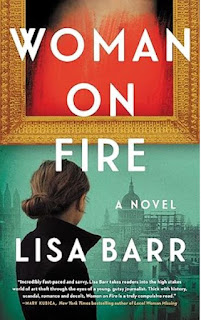
"Woman on Fire" by Lisa Barr, a novel about a young, savvy journalist who gets embroiled in a major international art scandal centered around a Nazi-looted masterpiece, an Expressionist painting by an artist who was murdered by the Nazis, forcing the ultimate showdown between passion and possession, history and truth, a thrilling tale of secrets, love, and sacrifice that illuminates the destructive cruelty of war and greed and the triumphant power of beauty and love, Woman on Fire tells the story of a remarkable woman and an exquisite work of art that burns bright, moving through hands, hearts, and history. Overall 4.4 out of 5 stars on Amazon.
AI-Generated Novel: “Nightshade Market" by Min Jin Lee, a nonexistent, made-up novel from the author of “Pachinko” about Seoul’s underground economy. The AI made-up novel follows three women whose paths intersect in an illegal night market and examines class, gender, and the shadow economies beneath prosperous societies.
Try this instead:

"The Island of Sea Women" by Lisa See, a novel set on the Korean island of Jeju that explores the friendship between Mi-ja, the daughter of a Japanese collaborator, and Young-Sook, the heir apparent to a family of Korean pearl divers, called "haenyeo." Throughout the decades from Japanese rule to the present, the two become close, but find their relationship strained as a result of their backgrounds.
As Mi-ja and Young-Sook take up their positions as pearl divers, they know they are beginning a life of excitement and responsibility—but also danger. "The Island of Sea Women" takes place over many decades, beginning during a period of Japanese colonialism in the 1930s and 1940s, followed by World War II, the Korean War, through the era of cell phones and wet suits for the women divers. Throughout this time, the residents of Jeju find themselves caught between warring empires. Little do the two friends know that forces outside their control will push their friendship to the breaking point. Overall 4.5 out of 5 stars.
AI-Generated Novel: “The Boiling Point" by Rebecca Makkai, a nonexistent AI novel about a climate scientist who is forced to reckon with her own family’s environmental impact when her teenage daughter becomes an eco-activist targeting her mother’s wealthy clients.
Try this instead:

"The Beauty of the End” by Lauren Stienstra, a work of speculative fiction about two sisters navigating the complex moral terrain of reproductive ethics, individual freedom, and society’s duty to a future facing imminent extinction. Charlie Tannehill and her twin sister, Maggie, are just eight years old when an unfortunate scientific discovery upends their world—and the world order. They discover that "extinction" has been encoded in every living creature’s DNA, with the expiration date set to only four generations away. A decade later, unsure of what tomorrow holds, Charlie and Maggie enroll as counselors in a government-run human-husbandry program. By offering cash rewards for reproduction, they hope to forestall humanity’s decline and discover a genetic mutation that might defeat it. While Charlie struggles with the ethical implications of the work, Maggie makes unspeakable sacrifices to improve her odds of success—but unchecked ambition could come at a greater cost than even she realizes. Torn between her own morality, her love for her sister, and the pressures of a vanishing civilization, Charlie must search deep within to decide what she’s willing to sacrifice—for herself, for Maggie, and for society—to salvage hope for the whole of humankind. Overall 4 out of 5 stars on Amazon.
AI-Generated Novel: “Salt and Honey" by Delia Owens, a fake novel that blends science with a coming of age tale set in the salt flats of Utah.
Try this instead:

"Before the Swallows Come Back" by Fiona Curnow, a novel that celebrates the natural world, showing how the main characters are forced to live outside of society's norms and survive alone in the wilderness as they undergo the ultimate fight for justice. Tommy struggles with people and communicating, preferring solitude and drifting off with nature. He is protected by his Scottish Tinker family who keep to the old ways. A way of life that is disappearing. A life of quiet seclusion under canvas is all that he knows. Charlotte cares for her sickly father. She meets Tommy by the riverside and an unexpected friendship develops. Over the years it becomes something more, something crucial to both of them. But when tragedy strikes each family they are torn apart. Charlotte is sent far away. Tommy might have done something very bad. Before the Swallows Come Back is a beautiful story of love, found family, and redemption that will break your heart and have it soaring time and time again as you sit, desperately hoping for the triumph of goodness over adversity. For justice. Overall 4.4 stars out of 5 on Amazon.
AI-Generated Novel: “Hurricane Season" by Brit Bennett, an exploration of family bonds torn by natural disasters. When a Category 5 hurricane forces estranged siblings to shelter together in their childhood home, long-suppressed tensions emerge alongside unexpected reconciliations.
Try this instead:

"Clear Light of Day" by Anita Desai, a rich, Chekhovian novel about family and forgiveness. Bimla is a dissatisfied but ambitious teacher who lives in her childhood home and cares for her mentally challenged brother, Baba. Tara is her younger, unambitious sister, married and with children of her own. Raja is their popular, brilliant, and successful brother. When Tara returns for a visit with Bimla and Baba, old memories and tensions resurface, blending into a domestic drama that leads to beautiful and profound moments of self-understanding. Set in the vividly portrayed environs of Old Delhi, “Clear Light of Day" does what only the very best novels can do: it totally submerges us. It also takes us so deeply into another world that we almost fear we won’t be able to climb out again. A universal tale of unhealable family hurts, distinctively shaded with enticing glimpses of India’s Hindu middle-class in shabby decline. Overall 4 out of 5 stars on Amazon and a Booker Prize finalist.
So there you have it: a human-generated Summer Reading List to supplant your AI-generated list. These books are all available on Amazon by clicking on the covers. You're welcome!
Can you think of any book that deserves to be on this list? Let me know in the comments!
Wednesday, May 21, 2025
Finding the Perfect Title for Your Book
 "
"After writing your novel and sweating over your blurb, finding the perfect title is probably the hardest task. How do you encapsulate the idea, mood, or essence of your book in just a few words? How do you find a title that grabs the reader's attention? What kind of titles work best? Also, when is it a good idea to just use a name? Would "Anna Karenina" or Daphne du Maurier's "Rebecca" have worked with a different title? What about "One Flew Over the Cuckoo's Nest"? And finally, how did Peter Benchley come up with the novel title, "Jaws," a name that I can still recall screaming at me from the drugstore bookshelf.
Finding the perfect title that sells books and stands out from the crowd is no easy task. "The Mysteries of Udolpho," the quintessential 1794 Gothic novel by Anne Radcliffe about the misadventures of a young lady, including the death of her parents, supernatural terrors in a gloomy castle, and the machinations of an Italian brigand, make it the archetypal example of a Gothic novel. The title contains the word mystery and the name of an Italian castle, evoking feelings of curiosity, terror, and wonder. It is a title that could work in any era and seems to have transcended time and place. Would you dare enter a castle with the name "Udolpho"? Would you dare read this book without all the windows and doors firmly locked and secured? Methinks not.
One of the easiest methods to pick a title is to choose a noun phrase. A quick look at your bookstore shelf will show that many popular tiles are just intriguing noun phrases, which is just a string of words that mean a person, place, or thing. The idea behind these titles is that they are simply constructed, easy to understand, and they help the reader visualize some aspect of the book. Think "The Boy in the Striped Pajamas," "The Girl on the Train," "A Gentleman in Moscow," "The Book of Lost Names," "What She Left Behind," or "One Flew Over the Cuckoo's Nest." Each title has something intriguing about it and evokes interest. There is also a bit of mystery in each title. What exactly is a night circus? And what do you picture with "One Flew Over the Cuckoo's Nest"? Does a psych ward in a hospital come to mind?
Another way to pick the perfect title for your book is to pull a line from the book, something that can stand on its own and provide some insight into the story or theme. Think "The Catcher in the Rye" by JD Salinger, "A Moveable Feast" by Hemingway, "The Things They Carried" by Tim O'Brien or "All Quiet on the Western Hemisphere" by Erich Maria Remarque. Two other great examples are books that used the last sentence to create the title, "The Importance of Being Earnest" and "Heart of Darkness" come to mind. Interestingly, this is how Margaret Mitchell picked her title for "Gone with the Wind." The last line has Scarlett saying, "After all...tomorrow is another day!"

Peter Benchley initially struggled to name his novel about a killer shark. Originally, he called it "Silence in the Water," but after his father suggested "The Jaws of Leviathan," he settled on the one-word title, "Jaws." This was a powerful, evocative word, and during the summer it was released, it was a powerful marketing tool. Readers had no choice but to pick it up and read it. Apparently, Benchley's editor loved it for its brevity and mysterious quality. Millions of readers did, too. One word titles, when chosen correctly, can be very powerful. But they can also be flat and dull.
Let me explain. If the one-word title is too ordinary or dull, such as "Susan," the original title of Jane Austen's "Northanger Abbey," you miss all the Gothic horror and mystery of the tale, which includes a visit to a mysterious abbey, the site of all the mystery and intrigue the novel presents. Likewise, "Tomorrow is Another Day," which was the original working title for "Gone with the Wind" doesn't really work. It's ordinary and sort of...well, dull. Which one of those titles is evocative to you and which one is ho-hum? Maybe I'll get to "Tomorrow is Another Day"...well, another day.
The next strategy is to consider your genre. Ultimately, your book title is a piece of marketing copy. It has to sell your book. Naturally you want it to feel significant or fit your story, but the goal is to get the reader interested enough to buy your book. A romance would not have words like "horror" or "terror" in the title. Neither would a Woman's Fiction novel. Words like survive, night, terror, or horror clearly reflect thrillers or horror novels. Fantasies have their own stock phrases or words, like shadow, war, night, dead, dark, blood, magic, and dream. The trick is to choose something that does not feel cliché or overdone.
When I was writing "Island on Fire," a novel that is part historical thriller, part horror, part survival tale, part romance, I struggled with the title. Some of the examples I came up with were:
The Martinique Horror
Terror in Martinique
Fire Mountain
Devil Mountain
Island of No Escape
Island of Eternal Fire

The point is, there are no easy or clear answers. Sometimes the best idea is to go to your beta readers or followers and ask their opinion. Ultimately, you want the most concise, memorable, and relevant phrase that captures the essence of the story. When all else fails, tell us what happens in the book, like "Summer of My German Soldier," "Mutiny on the Bounty, "Twelves Years a Slave," or "The Devil Wears Prada." Sometimes the simplest message is the most powerful, poignant, and irresistible. What is your favorite title and why? Let me know in the comments!
Wednesday, April 23, 2025
Cover Reveal: Brooklyn Masala, A Hilarious Tale of Guns, Gurus, and Gangsters

I know it's been a long time since I've written a blog post. The reason for that is secrecy. I've been working feverishly on a new novel, one I'm very proud of, something totally different from my other novels. A project that's close to my heart, new, contemporary, funny, and highly original.
For that reason, I haven't shared much about the characters and the premise of BROOKLYN MASALA, which is about a Brooklyn housewife who goes to see an Indian guru to fix her marriage problems and ends up an unwitting diamond smuggler and murder suspect.
Many parts will have you laughing out loud. And if you're wondering how this new novel came about, grab yourself a cup of coffee and sit back because it's a fascinating tale.
Back in 2021 when I was holed up in a motel working on a writing project, I had a sudden epiphany. I had noticed a local Trader Joe's and wanted to learn more. Curious, I went inside and was intrigued to see so many boxes of frozen Indian food in the freezer section. Food that seemed to draw quite a bit of attention. Everything from Chicken Tikka Masala to Palak Paneer to Vegetable Biryani. There were even frozen parathas! It seemed that people couldn’t get enough of this exotic, tasty food and they were constantly selling out.
I was sure there was a novel in there somewhere, so I decided that when I got back to Brooklyn, I would research everything I could about Indian food and create a novel around it. With time, a character began to form on the page, that of a harried Brooklyn housewife named Bella Bloom whose lack of cooking skills is driving away her husband. She seeks out a Guru to try and save her marriage. One thing leads to another and suddenly she’s cooking Indian food and making Indian spices to keep her marriage and family intact. In addition to Bella, I introduce the characters of Maharishi Krishna Ram, otherwise known as the Garden State Guru, and Dolly Parton Patel, an ex-Bollywood star turned cooking goddess inspired by Aishwarya Rai. Together with a colorful cast of characters, these main characters operate in a world where Indian food and culture play a major role, and in some ways, Indian food is even a supporting character in the story.
In time, the plot developed that I was able to weave together from stories I culled from the headlines surrounding diamond smuggling inside chocolate bars, diamond switching on 47th Street, and Indian Gurus who may or may not be on the up and up. That's the beauty of fiction: you can take stories from the headlines and weave them into a story to delight and entrance your audience almost like a snake charmer minus the snake.
Yes, I love being a writer!
During my extensive research, another interesting aspect began to develop on the page, and that concerned chocolate.
I suppose I had always known about the importance of Cadbury chocolates in Indian culture, but when I began working on the manuscript of Brooklyn Masala, I visited several Indian grocery stores in Brooklyn and Jersey City and noticed one ubiquitous product that always appeared near the cash register: Cadbury Chocolates.

For Indians, few products have captured their heart like chocolate, and their brand of choice is Cadbury. First imported to India by the British during the colonial era, chocolate soon became a daily habit for some twenty percent of Indians. And of that twenty-percent, Cadbury accounts for two-thirds of all sales. In fact, the chocolates are so beloved in India, that Indians view them as a distinctly Indian product.
Even today, brand loyalty surrounding Cadbury endures, even among members of the Indian diaspora. The brand evokes an almost permanent nostalgia and an undying love for the treat that is unmatched by any other candy product. And no trip to an Indian grocery store is complete without that purple foil-wrapped chocolate bars that stole the heart of India. And that is why I made Cadbury an important element of the story-line.
While the story is at heart a thriller, it's also an amateur sleuth novel, a comic satire, a mystery, and a great girl buddy novel. It's about second chances in life. It's also about starting over. It's about getting out of one's comfort zone to find hidden strengths and new talents. It's about remaking your life when you've hit rock bottom. I hope you will enjoy reading Brooklyn Masala as much as I enjoyed writing it.
Stay tuned for more news!
Thursday, October 19, 2023
Poem: The Smoke Rises High In The Negev Sky

Photo by Hanan Greenwood
The smoke rises high in the Negev sky,
A burning house, a car, a mother, a child
What happens to martyrs after they die-
Do their souls weep for all the defiled?
Do the Heavens cry out for those who are dead
And for the living who would take their place.
What happens to letters unsent and words unsaid-
Do they linger in some dark, quiet space?
When their memories are gone, their faces forgotten
Will the world pause to remember their dread?
Can life carry on from a peace misbegotten
After every last tear has been shed?
In the Holy of Holies, the cherubim cry out
They pray for their Zion restored
When the cedars of Lebanon will sprout in the wild
And the desert shall bloom like the rose.
When sorrow and sadness at last flee away
And the arrogance of man is brought low
And in the haunts where the jackals once lay,
Grass and reeds and papyrus will grow.
A burning house, a car, a mother, a child
What happens to martyrs after they die-
Do their souls weep for all the defiled?
Do the Heavens cry out for those who are dead
And for the living who would take their place.
What happens to letters unsent and words unsaid-
Do they linger in some dark, quiet space?
When their memories are gone, their faces forgotten
Will the world pause to remember their dread?
Can life carry on from a peace misbegotten
After every last tear has been shed?
In the Holy of Holies, the cherubim cry out
They pray for their Zion restored
When the cedars of Lebanon will sprout in the wild
And the desert shall bloom like the rose.
When sorrow and sadness at last flee away
And the arrogance of man is brought low
And in the haunts where the jackals once lay,
Grass and reeds and papyrus will grow.
Wednesday, January 11, 2023
New Poem: Dreams

A longing for an unreachable goal,
Obscure desires deep in our subconscious
That haunt us even as we sleep.
The nighttime is the mind’s chance to rebuild,
Fulfill the longings of each desperate soul
To awaken memories of a distant promise,
That lie dormant, hidden somewhere deep.
A world without order, a world without sense
Awaits us each night when we hibernate,
Each detail a mystical connection
That exists not in our waking state.
The search for meaning, the search for clues,
Answers to life’s riddles as we snooze
Friendships lost; tasks yet undone
That when we awake are soon forgotten.
Random images from a long time ago,
From out of childhood’s unconscious mind
That stalk us each night after bedtime
From out of the darkness and obscurity.
If only we could finally crack the code
And bring light to this eternal mystery!
To awaken memories of a distant promise,
That lie dormant, hidden somewhere deep.
A world without order, a world without sense
Awaits us each night when we hibernate,
Each detail a mystical connection
That exists not in our waking state.
The search for meaning, the search for clues,
Answers to life’s riddles as we snooze
Friendships lost; tasks yet undone
That when we awake are soon forgotten.
Random images from a long time ago,
From out of childhood’s unconscious mind
That stalk us each night after bedtime
From out of the darkness and obscurity.
If only we could finally crack the code
And bring light to this eternal mystery!
Sunday, October 23, 2022
More on Universal Truths in Literature
My most popular post without a doubt is “Why We Need Universal Truths in Literature,” which has garnered over 4,500 views. This is shocking enough, and I never stop asking myself why a post about a tired old concept like “universal truths” would attract so many readers, especially given that we are already living in post-modern, post-rational world.
Or are we?
As I wrote in my previous article, Humans have an insatiable desire for truth, and good literature and art in general awaken the knowledge of these truths that exist in our subconscious, especially since truth appears to be embedded in our DNA. In this sense, truth can never be excised, no matter how much we are told the opposite or subjected to propaganda. We know truth when we hear it, when we see it, and when we read it. We are drawn to truth like moths to a flame because it awakens in us concepts that are eternal, and can never be expunged from our souls. This is the reason why art and literature are usually the first things to go in totalitarian societies because art brings us dangerously close to the truth. It awakens us to the lies and distortions that we are subjected to. Art allows us to transcend our present situation, no matter how dire or repressive, with timeless concepts. It envelops our humanity in a cocoon of eternal wisdom and meaning that shield us from lies and deceit. Art is transparent. It allows us to see deep within a concept to its universal qualities and how they apply to our lives. Art never hides the truth: it illuminates and glorifies it. Art preserves the truth for future generations, teaching us what it means to be human in a chaotic and often dangerous world.
The Function of Art
If you ask the average person why they pick up a book to read, most people would say to be entertained, to get a thrill, to experience a romance, to travel, to learn, to feel some emotion. Hardly anyone would say they want to encounter a truth. For what is a truth? Who says if something is true or not? Who gets to decide these matters?
During all the time he is sealed up in the vault, his aunt never goes looking for him. She never worries about him. In fact, she doesn’t even care that he’s gone. She's almost glad to be rid of him. It takes his teacher to go looking for him after he fails to appear in class several days in a row. But the teacher doesn’t go looking or him initially because he fears he’s missing. He goes to the aunt’s house to pay him a sick call, since he believes the boy is sick, and is shocked to discover the boy is not sick, but missing. When he asks about the boy, the aunt merely shrugs her shoulders and says, “He is run off I know not where, but as he makes his bed, must he lie on it. And if he run away for his pleasure, may stay away for mine. I have been pestered with this lot too long, and only bore with him for poor sister Martha’s sake. But ‘tis after his father that the graceless lad takes, and thus rewards me.” She them slams the door in the teacher’s face.
Initially the teacher believes the boy has run off to sea, but after putting a few clues together, he realizes the boy has been shut up in a vault and thus saves his life.
In these few paragraphs I learned some shocking universal truths. And by universal, they apply to everyone regardless of time or place. They apply to all humans on the basis of our shared humanity:
a) There’s a danger in being with people who don’t care about you. You must have someone to care about you and inquire after you.
b) You never know who will be your friend in the end and who will be your enemy.
c) Visiting the sick is not just a nice thing to do. It could literally save someone’s life.
d) When one does not love you, they will not care about you or ask about you.
In the end, the teacher finds John Trenchard close to death, and with the help of the local tavern-keeper, nurses him back to life. When John goes back to his aunt’s house, instead of welcoming him back home, she greets him with harsh words and does not let him cross the threshold, saying she would have no tavern-loungers in her house. She tells John to go back to the tavern and he realizes that his aunt’s home has never been his true home:
“When I heard such scurvy words, felt the devil rise in my heart, and only laughed, though bitter tears were in my eyes. So I turned my back upon the only home that I had ever known, and sauntered off down the village, feeling very alone.”
And thus I learned still another universal truth: that people use religion and morality as a means to emotionally abuse people and exclude them.
"Moonfleet" is a great adventure novel about a boy overcoming terrible odds, but in the end, it is also a teacher of important truths. A simple story with such profound wisdom and moral teachings!

Or are we?
As I wrote in my previous article, Humans have an insatiable desire for truth, and good literature and art in general awaken the knowledge of these truths that exist in our subconscious, especially since truth appears to be embedded in our DNA. In this sense, truth can never be excised, no matter how much we are told the opposite or subjected to propaganda. We know truth when we hear it, when we see it, and when we read it. We are drawn to truth like moths to a flame because it awakens in us concepts that are eternal, and can never be expunged from our souls. This is the reason why art and literature are usually the first things to go in totalitarian societies because art brings us dangerously close to the truth. It awakens us to the lies and distortions that we are subjected to. Art allows us to transcend our present situation, no matter how dire or repressive, with timeless concepts. It envelops our humanity in a cocoon of eternal wisdom and meaning that shield us from lies and deceit. Art is transparent. It allows us to see deep within a concept to its universal qualities and how they apply to our lives. Art never hides the truth: it illuminates and glorifies it. Art preserves the truth for future generations, teaching us what it means to be human in a chaotic and often dangerous world.
The Function of Art
If you ask the average person why they pick up a book to read, most people would say to be entertained, to get a thrill, to experience a romance, to travel, to learn, to feel some emotion. Hardly anyone would say they want to encounter a truth. For what is a truth? Who says if something is true or not? Who gets to decide these matters?
One of the many functions of art is to express emotions, to enrich mankind with teachings, to immortalize stories and heroes. But also, one of the functions of art is to teach us what is true about ourselves. This seems a little self-contradictory since it would appear that it was the job of the natural sciences to give us truth. But rather than being didactical, literature can demonstrate the truth about our humanity in a more effective way: via the characters' behavior and actions, thus teaching a concept in a rather stark and more memorable way.
Allow me to illustrate.
 Not too long ago I was reading an old classic called "Moonfleet" by J. Meade Falkner (1898), a historical novel about a young orphan who gets involved with smugglers. About four chapters in, I wasn’t too impressed with the novel. It was only when I reached Chapter 5 that I was awestruck. Un the first two pages of Chapter 5, I encountered no less than four universal truths. This is astounding given the fact that most novels are lucky if they contain even one universal truth. Here were four in a few paragraphs! How was this possible?
In the story, the orphan (John Trenchard) has lost his mother and father early on. He lives with an uncaring aunt who hated his father and resents having to raise him. Because young John feels so alienated in his aunt’s home, he often goes out wandering, and on one night, he spies some smugglers and follows them to their hiding place (a crypt) where he is unwittingly locked up and left to die.
Allow me to illustrate.

In the story, the orphan (John Trenchard) has lost his mother and father early on. He lives with an uncaring aunt who hated his father and resents having to raise him. Because young John feels so alienated in his aunt’s home, he often goes out wandering, and on one night, he spies some smugglers and follows them to their hiding place (a crypt) where he is unwittingly locked up and left to die.
.jpg) |
| James Trenchard is an orphan who finds himself in peril in "Moonfleet." |
During all the time he is sealed up in the vault, his aunt never goes looking for him. She never worries about him. In fact, she doesn’t even care that he’s gone. She's almost glad to be rid of him. It takes his teacher to go looking for him after he fails to appear in class several days in a row. But the teacher doesn’t go looking or him initially because he fears he’s missing. He goes to the aunt’s house to pay him a sick call, since he believes the boy is sick, and is shocked to discover the boy is not sick, but missing. When he asks about the boy, the aunt merely shrugs her shoulders and says, “He is run off I know not where, but as he makes his bed, must he lie on it. And if he run away for his pleasure, may stay away for mine. I have been pestered with this lot too long, and only bore with him for poor sister Martha’s sake. But ‘tis after his father that the graceless lad takes, and thus rewards me.” She them slams the door in the teacher’s face.
Initially the teacher believes the boy has run off to sea, but after putting a few clues together, he realizes the boy has been shut up in a vault and thus saves his life.
In these few paragraphs I learned some shocking universal truths. And by universal, they apply to everyone regardless of time or place. They apply to all humans on the basis of our shared humanity:
a) There’s a danger in being with people who don’t care about you. You must have someone to care about you and inquire after you.
b) You never know who will be your friend in the end and who will be your enemy.
c) Visiting the sick is not just a nice thing to do. It could literally save someone’s life.
d) When one does not love you, they will not care about you or ask about you.
In the end, the teacher finds John Trenchard close to death, and with the help of the local tavern-keeper, nurses him back to life. When John goes back to his aunt’s house, instead of welcoming him back home, she greets him with harsh words and does not let him cross the threshold, saying she would have no tavern-loungers in her house. She tells John to go back to the tavern and he realizes that his aunt’s home has never been his true home:
“When I heard such scurvy words, felt the devil rise in my heart, and only laughed, though bitter tears were in my eyes. So I turned my back upon the only home that I had ever known, and sauntered off down the village, feeling very alone.”
And thus I learned still another universal truth: that people use religion and morality as a means to emotionally abuse people and exclude them.
"Moonfleet" is a great adventure novel about a boy overcoming terrible odds, but in the end, it is also a teacher of important truths. A simple story with such profound wisdom and moral teachings!
We ignore the teachings of art and literature at our own peril.

Tuesday, September 6, 2022
New Cover Reveal: Island on Fire - Romantic Historical Thriller

For the new cover I wanted a more evocative image that highlighted the exotic jungle flora, the danger of the volcano, and a character whose life is in peril. Love this new design by Tim Flanagan at Novel Design Studio. He got the imagery perfect including the historical feel of the novel.
The novel is now on sale this Fall for .99 cents - Kindle version and $8.99 for the paperback. Take advantage of these new low prices to immerse yourself in a story of danger, romance, intrigue, adventure, and voodoo mysticism set at the turn of the last century on an island that is about to erupt from within, culminating in the worst volcanic disaster of the 20th century. You can buy a copy of ISLAND ON FIRE by clicking HERE.
Wednesday, August 31, 2022
Socrates: A Poem
One day while strolling in Athens town
I met a man of great renown
A scholar known as Socrates
This philosopher put me quite at ease
Great sir, said I, can you teach me—
The secrets of your philosophy?
And so, this Greek said with a wink:
“I cannot teach; I can only make you think!”
And so, I endeavored on a whim
To learn the secrets of his acumen
What made this man second to none?
He said, “Wonder is the beginning of wisdom.”
And then he said the strangest thing:
“The unexamined life is not worth living.”
That knowledge is a virtue; and ignorance a sin
For greatness comes in knowing that we know nothing.
His philosophy was all I yearned
Yet there was so much more I had to learn
He said, “Education is the kindling of a flame
Let it not burn out and die in vain!”

I met a man of great renown
A scholar known as Socrates
This philosopher put me quite at ease
Great sir, said I, can you teach me—
The secrets of your philosophy?
And so, this Greek said with a wink:
“I cannot teach; I can only make you think!”
And so, I endeavored on a whim
To learn the secrets of his acumen
What made this man second to none?
He said, “Wonder is the beginning of wisdom.”
And then he said the strangest thing:
“The unexamined life is not worth living.”
That knowledge is a virtue; and ignorance a sin
For greatness comes in knowing that we know nothing.
His philosophy was all I yearned
Yet there was so much more I had to learn
He said, “Education is the kindling of a flame
Let it not burn out and die in vain!”

Thursday, August 18, 2022
The Incredible True Story of America's First Shots Fired During WWI

On the evening of March 21, 1915, the German steamer ODENWALD attempted to quietly pull out of the harbor of San Juan, Puerto Rico, without customs clearance. As the ship was leaving the harbor, she was “met with a brisk machine gun fire from Morro Castle," said German Ambassador Count Johann von Bernstorff in an angry letter to Secretary of State Robert Lansing. A few minutes later, "a solid cannon shot struck the water a short distance in front of the ship's bow, raising a column of water from ten to twelve feet high. The engine was immediately stopped and backed at full speed. The forward motion of the ship ceased at once. In spite of which she was fired upon about three minutes longer. Marks of the bullets can be plainly seen in various places of the ship and hull. It was only through luck that no human life was lost in that onslaught."
This Caribbean tale of drama and conflict occurred just after Germany declared their policy of “unrestricted submarine warfare” in February of 1915, when they would sink any merchant ship heading to Great Britain without warning. This policy angered neutral countries, especially the United States. The tactic was only abandoned in September 1915, after the sinking of the LUSITANIA and ARABIC. But in the meanwhile, tensions were high. Germany desperately needed supplies. So, they ramped up their supply network through passenger ships of the Hamburg-America Line. The United States knew this, and knew that any ship that made it to Germany would prolong the war, prolong the agony. So, they disallowed Germany to make use of their neutral ports, among them, San Juan, Puerto Rico.
 |
| The Odenwald in San Juan harbor. |
On two thorough searches by harbor officials, the ODENWALD was refused permission to sail. Tensions were high among the sailors and harbor officials. “There was no ground upon which to decline to issue the papers,” insisted Bernstorff. “The reckless action of the harbor authorities in opening fire on the steamer without warning was not justified by the circumstances of the case.” Secretary of State Robert Lansing defended the action, saying that “in her endeavor to leave port, the ODENWALD “committed a willful breach of the navigation laws of the United States…which made it necessary to employ force to prevent her unauthorized departure.”
Were the port authorities justified?
When war broke out in August 1914, the United States tried to remain neutral. Still, American ships carried food, ammunition, and raw materials to Britain and Russia, which remained a thorn in the side of  the Kaiser. In addition, German ships were subject to strict regulations as to how long they could remain in port, and what they were allowed to carry. When the ODENWALD tried to pull out with a shipload of supplies bound for U-boats in the Atlantic, her sister ship, the S.S. PRÄSIDENT was hovering nearby, waiting to see how far they could push American patience with their willful breaching of the navigation laws of the United States. The PRÄSIDENT was a German vessel that served as both passenger and cargo ship before the war. When the war broke out, she also began to serve in the German Navy as a support vessel to the cruiser Karlsruhe by providing radio communication and supplies. She arrived in Puerto Rico in December 1914 to take refuge from British and French cruisers that were hunting her and eventually was interned by the U.S. government.

Unfortunately for the Germans, the officer on duty was a determined military officer who was having none of it.
The Captain of the ODENWALD, C. S. Segebarth, requested clearance to sail back to Hamburg the next day and 5000 tons of coal for the trip. Suspicious of the request, the local authorities decided to consult with Washington, D.C. and, afraid that the vessel would leave without clearance, alerted the commanding officer at the fortress of El Morro. Washington approved the use of force if necessary and the German captain of the ODENWALD was warned several times. Despite the Germans’ assurances that they would not leave without clearance, the soldiers on the fort made preparations in case such a situation occurred. A machine gun platoon was placed on the Bastión de San Agustín, 500 feet from the Morro Castle commanded by Captain Wood, and the heavy guns of El Morro were readied under the command of Lt. Teófilo Marxuach.
 |
| Col. Teófilo Marxuach (1877 – 1939) |
Col. Teófilo Marxuach was a Puerto Rican military officer who took decisive action that would make him known as the person who ordered the first shots fired of World War I on behalf of the United States. Born in Puerto Rico under Spanish rule, he studied military engineering in Guadalajara, Spain and received a lieutenant's commission in the Spanish Army. After the Treaty of Paris (1898) transferred control of Puerto Rico to the United States, Marxuach resigned the Spanish Army and joined the Porto Rico Regiment of Infantry, commissioned with a rank of second lieutenant. In 1908, the U.S. Congress reorganized the regiment as part of the regular U.S. Army and Marxuach took an oath of U.S. citizenship along with his new officer’s oath. That same year, he was promoted to the rank of first lieutenant and stationed at El Morro Castle.
The Captain of the ODENWALD, C. S. Segebarth, requested clearance to sail back to Hamburg the next day and 5000 tons of coal for the trip. Suspicious of the request, the local authorities decided to consult with Washington, D.C. and, afraid that the vessel would leave without clearance, alerted the commanding officer at the fortress of El Morro. Washington approved the use of force if necessary and the German captain of the ODENWALD was warned several times. Despite the Germans’ assurances that they would not leave without clearance, the soldiers on the fort made preparations in case such a situation occurred. A machine gun platoon was placed on the Bastión de San Agustín, 500 feet from the Morro Castle commanded by Captain Wood, and the heavy guns of El Morro were readied under the command of Lt. Teófilo Marxuach.
On the day in question, the customs inspector visited the ODENWALD, but his visit was cut short when the ship started her engines around 3:00 pm and began moving on the main channel towards the mouth of the harbor without clearance. The customs collector was asked to leave in a small boat. As the ODENWALD passed the Bastion de San Agustin, Captain Wood, standing on the parapet of the sea wall, hailed the vessel several times without success. The ODENWALD stayed on course and Wood ordered Sgt. Encarnacion Correa to fire warning shots with his machine gun. Failing to stop the vessel, Lt. Marxuach fired a 4.7 inch cannon of the Santa Rosa battery in the upper platform of El Morro across the bow of the ship in what is considered to be the first shot of World War I fired by the regular armed forces of the United States against any ship flying the colors of the Central Powers. When the ODENWALD stopped and dropped anchor at the mouth of the harbor under the fortress, she was eventually moved back to the upper harbor with a pilot and its supplies were confiscated. An international incident broke out when the German government accused the United States of holding the ODENWALD illegally against its will without firing the customary warning shot as required by international law. The United States government responded that Lt. Col. Burnham, commander of the fortress of El Morro Castle, made it clear that only warning shots were made and that none were aimed at the ODENWALD. Eventually, the ODENWALD was refitted and renamed SS NEWPORT by the U.S. government and assigned to the U.S. Shipping Board, where it served until 1924.

In 1917, the Germans resumed the practice of unrestricted submarine warfare against all Allied ships, which led to America's entry into the war. But they never stopped their smuggling and sabotage activities, which is the basis of my novel, THE UNLIKELY SPY, now out on Kindle and paperback.
Watch a video of Spanish historical re-enactors firing a cannon from the fort of El Morro, Puerto Rico:
Monday, August 8, 2022
The Unlikely Spy - Available for Preorder - Read a Sample Here.
Today The Unlikely Spy is available for preorder. Casablanca meets Notorious in a tale of danger, intrigue, espionage, and adventure.

1917. Emma Christensen is a young widow
who returns to the Danish West Indies to reclaim the life and the villa she
left behind. When she discovers her husband has disinherited her in favor of
his young heir—an illegitimate son—she turns to the one thing she knows,
gambling, and soon finds herself deeply in debt.
Emma is approached by Cornelius Smith, a representative of an American shipping line, who offers an alternative: infiltrate the suspicious Hamburg-American Line and spy on its nefarious leader, Julius Luckner, to gain valuable business intelligence for his firm.
It doesn’t take long for Emma to realize that both Smith and Luckner are not as they seem. Close to the Allies but even closer to the enemy, Emma bravely engages in missions that could blow her cover at any moment. But with the Panama Canal at stake, how far will she go to help the Allies?
The Unlikely Spy is a gripping and suspenseful World War I thriller from an accomplished thriller and historical adventure writer.
Read an excerpt here:
From the moment she left the
telegraph office, Emma had an eerie feeling that someone was following her. It
stayed with her all the way back to the hotel. She felt as if someone was watching
her every move although she was quite certain she had slipped past the German
in the lobby.
When she returned to her hotel, waited impatiently for Smith’s cable. She called down to the front
desk numerous times to ask if any message had arrived for her, but the answer
was always no. With no other recourse, she went to bed, tossing and turning
half the night, fearing that something terrible had happened to Allendorf and now
she was all alone. This was completely unexpected. For several agonizing hours
she pondered what she should do, but couldn’t come up with a viable plan. The
Germans were watching her every move. She was basically trapped in her hotel
room, and Smith was counting on her to complete her mission. But no one could
have foreseen such a reversal.
As the hours ticked by, she
had an ominous feeling she couldn’t shake, that her life was hanging
in the balance. The hairs on the back of her neck stood up and she had an unsettling
feeling that would not quit.
When she could no longer
tolerate her insomnia, she picked up the phone and ordered a chamomile tea from
room service, hoping it would calm her jangling nerves. When the drink arrived,
she splashed a bit of rum in it from her trusty flask. Yet she still had a nagging
feeling that something was wrong.
Her eyes fell on her purse. It
sat on the nightstand near her bed, just within her reach. She opened it, took
out the pistol, and rehearsed priming it so she could use it in a tight spot.
She needed to have the movements go like clockwork. There was no room for
failure in this business. Luckily it only weighed two pounds. That made
slipping it into her pocket easier. The magazine was already loaded with seven
bullets. Seven chances to save her life. She gripped the pistol in her right
hand and racked the slide, then added a bullet to the barrel. Now it was ready.
She flicked the lever to “safe” and set the pistol down on the nightstand. Perhaps
now she could sleep.
She lay down, pulled the sheet
around her, and turned off the light. She closed her eyes and tried to relax,
but she could not fall asleep.
Outside, the moon cast a
luminous glow on the surroundings. Crickets croaked their nightly serenade and
the stars lit up the heavens. The palm fronds billowed in the breeze. The waves
crashing on the rocks sent an ominous warning. Emma found it difficult to sleep
in a different bed, and impossible to relax when she had so much on her mind,
so much responsibility on her shoulders.
She got up and peered outside.
Despite the late hour, there were still people milling about, laughing and
heading to restaurants and casinos. Horse carriages trotted past while
motorcars meandered down the streets, their glowing lights like the eyes of a
puma. Sounds of amusement echoed from the restaurant below. Lights shone from the
ships in Manzanillo Bay, creating a scene that was idyllic, almost peaceful.
Further out, she could see the lights on the ships waiting to enter the canal.
There was a long line of them that suspended off to the horizon. Each one had
its own purpose and destination. Each one could be sunk at any time by German
torpedoes or hidden bombs. She shivered. An explosion along the canal would
cause chaos for the Allies. The Kaiser would gloat in his victory. His generals
and their underlings would launch even more attacks. Emma could picture Luckner
in his office toasting his triumph, patting himself on the back even as the
embers of the canal still glowed.
She went back to bed and
covered herself with the sheet, trying to block out her worries. But it was impossible.
She had a sense of impending doom. And for some strange reason, the hairs on
the back of her neck stood up.
Suddenly she heard a scratching
noise near her door. A man’s footsteps shuffled just outside. She froze and
listened, not daring to move. Someone was fumbling with the lock, trying to
break in. She sat up in bed, listening. She felt her heart stop. Yes, somebody
was trying to break in.
She fumbled in the dark for
her pistol. She grabbed it, flicked the safety to “fire” then eased herself off
the bed. Crouching down on the floor, she listened as the noise continued ever
so slightly that it was barely detectable. She sat behind the bed, aiming the
pistol, not daring to breathe.
The latch turned and the door opened, allowing just enough light from the hallway to illuminate the figure of a man entering her room. When he was inside, he closed the door behind him and latched it. Her eyes widened. He tiptoed toward the bed and raised his hands as if to attack. Emma’s heart pounded as she released the pistol break and held her breath.
Available for preorder by clicking here.
A photo gallery of scenes in the novel:

The Grand Hotel, St. Thomas, Danish West Indies

Charlotte Amalie, St. Thomas

Hotel Washington, Colon, Panama

U.S. ships guarding the Panama Canal, 1918


Havana, Cuba

Fashions circa WWI.
Sophie Schiller writes thrillers and historical adventures. Her latest novel is THE UNLIKELY SPY, a WWI Spy Thriller set in the Caribbean, Mexico, and Panama. Sophie's other novels, THE LOST DIARY OF ALEXANDER HAMILTON, ISLAND ON FIRE, RACE TO TIBET, and TRANSFER DAY are available from Amazon, Nook, Kobo, Google Play, and iTunes.
Subscribe to:
Posts (Atom)